Best DNP Programs

District of Columbia

Best DNP Programs In District of Columbia 2026

4 institutions in District of Columbia hold CCNE accreditation for the Doctor of Nursing Practice. Published in-state graduate tuition among them starts at $56,930 a year, at The Catholic University of America.
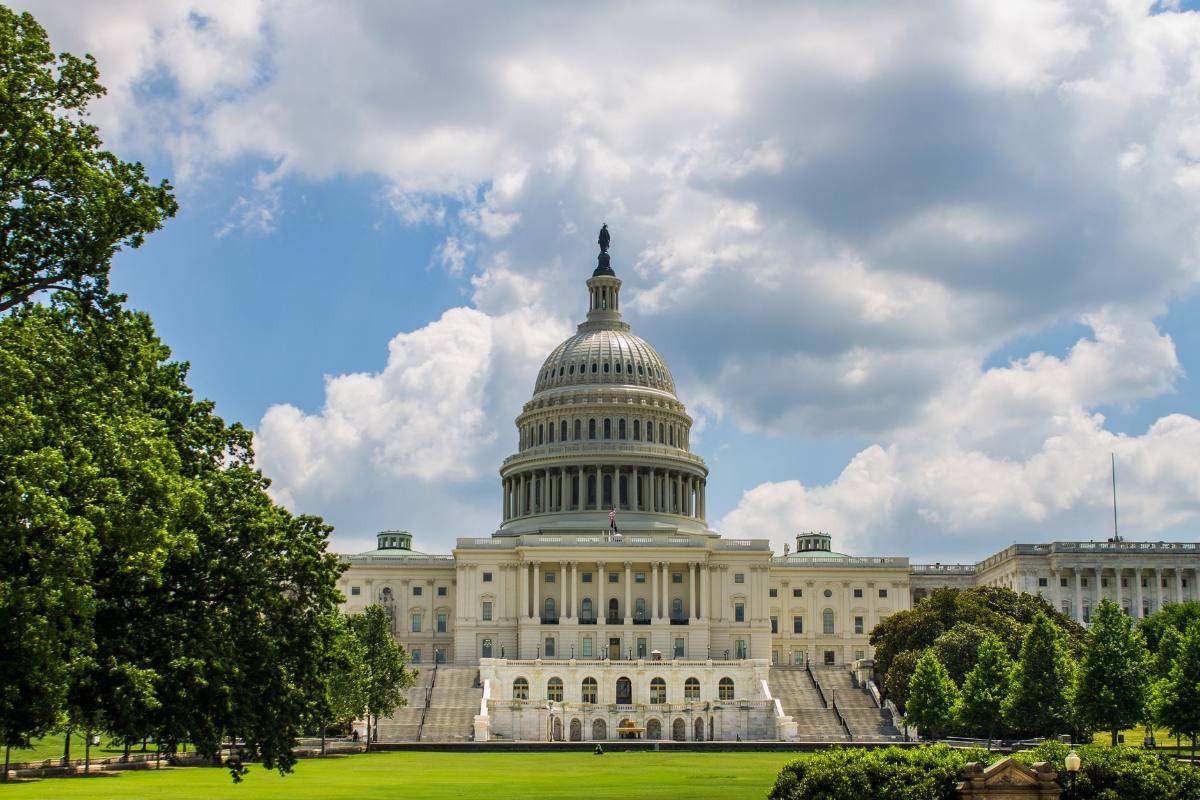
The domed United States Capitol behind its lawn and trees under a bright sky
On this page

Key Takeaways

  1. 1

    A ranking of very few. 2 District of Columbia institutions are scored, which makes this a comparison between 2 and not a ranking in any ordinary sense, the national list is where a broader comparison lives.

  2. 2

    In-state rates sit in a narrow band. The 2 District of Columbia institutions that publish an annual in-state rate run from $56,930 to $67,420, the highest only about 1.2 times the lowest, so cost separates them less here than it does nationally.

  3. 3

    Every program here is private. All 2 District of Columbia institutions with federal figures are private, so the published rate does not turn on residency, and private sticker prices are discounted more heavily than public ones.

  4. 4

    About half are delivered at a distance. 1 of the 2 carry the federal distance-education flag, which covers coursework and never the supervised practice hours.

How This Ranking Is Scored

Three published figures, weighted. Scores are relative to the 2 institutions on this page and to nothing else.

  1. 50%

    Published in-state graduate tuition

    Institution-level. Published annual graduate tuition, not a DNP per-credit rate and not net of aid.

  2. 35%

    Established program

    Program-level. DNP conferrals in this CIP and award level in the reporting year, saturating at 25. Above that a program scores full marks and gains nothing further for size.

  3. 15%

    Institution-wide undergraduate completion

    Institution-level and undergraduate. The IPEDS 150%-of-normal-time rate for first-time, full-time bachelor's students.

Nothing is imputed. A program that does not publish a figure is scored on the ones it does publish, with the remaining weights renormalized; below 2 published figures it is listed without a position rather than ranked on a single number. Accreditation is a condition of appearing at all, not a factor that earns points. What the rubric cannot see.

Accredited Schools, Ranked

Ordered on published in-state tuition, annual DNP conferrals and institution-wide undergraduate completion, weighted for a state page so cost leads. Scores are relative to the 2 institutions on this page and not to the country, the same program carries a different number on the national list. How this is built.

# Program In-state tuition DNP awards UG completion Score of 100
1 of 2 George Washington University Washington, DC · Private nonprofit · offered online $67,420 14 84% 50
2 of 2 The Catholic University of America Washington, DC · Private nonprofit $56,930 4 79% 50

The Best 2 DNP Programs In District of Columbia, Ranked

Every ranked institution in District of Columbia, with what the federal record publishes for it and how its score was composed.

Ranked 1 of 2

George Washington University

Washington, DC

50 of 100
  • CCNE-accredited
  • Private nonprofit
  • Doctorate (professional)
  • Offered online

4 DNP tracks at this institution, Family nurse practitioner, Geriatric, Nursing practice (general), Psychiatric-mental health NP. Ranked once, on the largest.

George Washington files four DNP specialties, family, geriatric, psychiatric mental health and a general track, and delivers them in a hybrid shape: coursework online with some on-campus time for testing and skills training. Online here means most of it rather than all of it, and the on-campus days are the ones that need planning if you are traveling in. Clinical hour requirements are set per specialty rather than across the degree, so the specialty page is where the real number lives. Tuition sits near the very top of the range on this site, which makes the funding conversation worth having before the application one.

In-State Tuition
$67,420
Out-Of-State
$67,420
DNP Awards
14
UG Completion
84%

Scored on

  • Published in-state graduate tuition 0
  • Established program 100
  • Institution-wide undergraduate completion 100

Ranked 2 of 2

The Catholic University of America

Washington, DC

50 of 100
  • CCNE-accredited
  • Private nonprofit
  • Doctorate (research)

Catholic University runs a joint doctorate and business master’s on overlapping credits, which is a different proposition from taking the two separately. The point of it is executive work in health systems, where you need the clinical grounding and the finance and operations side together. It runs fully online with optional in-person experiences. Admission to that route wants a bachelor’s and a master’s in nursing, a cumulative 3.2, and documented completion of 500 or more post-baccalaureate clinical hours, though the school will consider exceptions case by case. Documented is the word to plan around, because assembling that record takes longer than people expect. A straight doctorate runs from either a bachelor’s or a master’s for anyone who does not want the business half.

In-State Tuition
$56,930
Out-Of-State
$56,930
DNP Awards
4
UG Completion
79%

Scored on

  • Published in-state graduate tuition 100
  • Established program 0
  • Institution-wide undergraduate completion 0

Also Accredited In District of Columbia

These programs hold current CCNE accreditation. They file their DNP conferrals under a specialty classification rather than under Nursing Practice, so the federal tuition and conferral figures used above are not available for them and they are not scored.

  • Georgetown University CCNE-accredited DNP

    Georgetown builds the doctorate out of 15-week terms and publishes both routes clearly. From a bachelor's it is 69 to 74 credits over eight terms full-time, about 33 months, or eleven terms part-time, with 1,000 to 1,200 clinical hours. The executive route from a master's is 30 credits across five terms, roughly 20 months, with 250 or more practice hours. Both are online with required on-campus work: two or three clinical intensives on the practitioner route, using standardized patients, and two or three executive sessions on the leadership route. Georgetown also states that scholarships of up to $35,000 are available to highly qualified applicants.

  • Howard University CCNE-accredited DNP

    Howard runs the doctorate in two very different sizes, and which one applies to you depends on whether you already hold an advanced practice credential. The route for practicing APRNs is 38 credits. The psychiatric mental health nurse practitioner track, which prepares you for the role from the start, is 78. Both carry 1,000 clinical hours. You can study full-time or part-time. Transfer credit is capped at twelve, and only non-clinical courses taken at graduate level qualify, so clinical work done elsewhere does not move across. As the doctorate at a historically Black university in the District, this is also the in-District option rather than a Maryland or Virginia commute.

Choosing A DNP Program In District of Columbia

What studying in District of Columbia changes. The questions that apply wherever you study are on the national ranking page.

The District of Columbia board of nursing decides the license, not the diploma

No doctorate confers authority to practice or prescribe. That authority comes from an advanced practice license the state issues and the national certification behind it, which is why a DNP-prepared and a master's-prepared nurse practitioner on the same license prescribe the same things. What varies between states is the licensure requirement itself, so take it from the board rather than from a program page, and take it early: several programs want an active license in the state where your practicum will happen rather than wherever you hold one now, and licensure by endorsement runs to months. What the degree does and does not grant sets out the distinction.

George Washington University carries the distance flag

1 of the 2 measured institutions in District of Columbia carry it. That flag records only that taught content can be delivered at a distance. It says nothing about campus days, and nothing about the supervised practice hours, which happen in a building with a preceptor present wherever you enroll. Ask for the number of on-campus days and the months they fall in, because that is what you hold against a roster. Online DNP programs ranks the distance-flagged field nationally.

The schools without figures are not the weaker ones

Georgetown University and Howard University file conferrals under a specialty classification rather than under Nursing Practice, so the federal columns this page ranks on do not exist for them. They carry the same CCNE accreditation as everything in the table above. A missing figure here is a filing convention rather than a verdict, and reading it as one would put a real option out of your reach for no reason. The notes beside those names come from the schools' own pages.

Who Licenses You In District of Columbia

Practice environment, as AANP classifies it
Full Practice
Licensing body
District of Columbia Board of Nursing
Verify a license
Nursys, the national license verification system operated by the boards themselves

AANP places District of Columbia in its full practice category, which it defines this way: state law lets nurse practitioners evaluate patients, diagnose, order and interpret tests, and initiate and manage treatments including prescribing medications and controlled substances, under the exclusive licensure authority of the state board of nursing.

A degree confers no prescriptive authority. It comes from a state advanced practice license and the national certification behind it, so a DNP-prepared and a master’s-prepared nurse practitioner holding the same license prescribe the same things.

So the thing to settle with the board is the licensure route itself: what it accepts as an equivalent program, which certification it recognizes for your track, and how long endorsement takes if you are licensed elsewhere. Endorsement runs to months, and it is the step people leave until after they have accepted a place.

Practice environment from AANP's District of Columbia fact sheet, read 2026-09-08; AANP last revised the classification 05/2026. It is AANP's reading of state statute rather than a federal designation, and statutes move each legislative session, so confirm it with the board before you rely on it. Board details read from the NCSBN member directory on 2026-09-08. Licensure requirements change by legislative session, so treat anything you read here as a pointer to the board rather than a substitute for it.

What The Work Pays In District of Columbia

BLS OEWS, May 2025. BLS classifies by occupation, not by credential: there is no DNP wage series, and every figure here covers everyone in the occupation regardless of which degree they hold.

OccupationMedian, District of ColumbiaEmployedRankNational median
Nurse practitioners29-1171$135,88068014 of 51$132,300
Registered nurses29-1141$102,54011,44011 of 51$97,550
Nursing Instructors and Teachers, Postsecondary25-1072$107,7701102 of 51$80,250

One occupation is missing from the table above: nurse anesthetists. BLS suppresses state estimates independently per occupation, so a blank here means the survey published no figure for District of Columbia rather than that nobody does the work. Nationally the median is $236,590.

Nurse practitioners in District of Columbia have a median of $135,880, which ranks 14 of the 51 jurisdictions the survey publishes a median for, across about 680 people in the state. A small workforce paid near the top of the national range is a market that pays well and opens rarely, which puts the weight on where your clinical placements are rather than on what a ranking says.

A median is the midpoint of what people in the occupation are paid, so half earn less and half earn more; it is not a starting salary and not an offer. Every row is one federal series, ranked against every jurisdiction that series covers. Nothing here is a job-board average. DNP salary sets out the national picture.

Shortage Areas, And The Debt Relief Attached To Them

HRSA designated primary-care Health Professional Shortage Areas, read 2026-09-08.

Designated areas
12
Of those, rural
0
Median score
22
Highest score
22

Unusually, most of the designated shortage in District of Columbia is not rural. Only 0 of the 12 designations are, so the approved site that qualifies you is as likely to be a city clinic as a country one. A designation is a statement about how many primary-care providers serve a defined area relative to its population. It describes supply, not hiring.

They score closely together, a median of 22 against a highest of 22, so the funding priority attached to one approved site here is much like the next.

Both federal loan repayment routes open to advanced practice nurses require working at an approved site inside a designated area, and the area’s score sets funding priority when applications outrun the money: Nurse Corps Loan Repayment Program and NHSC Loan Repayment Program. HPSA primary-care scores run 0-25; funding priority for loan repayment follows the score.

Whether a particular employer counts as an approved site is settled by the program, not by the designation, so check the site before you take the job rather than after. HRSA's shortage-area data portal maps the designations. Paying for a DNP covers the routes that do not depend on where you practice.

Studying From Outside District of Columbia

1 of the 4 accredited doctorates in District of Columbia carry the federal distance-education flag, which leaves most of the local field expecting you in the room and makes an out-of-state program a real comparison rather than a fallback. Either way it turns on one thing this site cannot answer for you.

Authority to enroll a distance student is set per institution and per state, and the federal flag this page counts records delivery rather than permission, so only the school can answer it. Ask two things before tuition enters the conversation: whether the program can enroll a resident of District of Columbia this cycle, and whether it will place you for supervised clinical hours near where you live.

What The Figures On This Page Are

Tuition is the institution's published annual graduate rate. It is not a DNP per-credit price, it is not a total program cost, and it is not what anyone pays after aid. A DNP taken part-time over four years does not cost four times the annual figure, because most programs bill by the credit.

DNP awards are conferrals in the reporting year at that institution. The figure says a program is running and how much of it is running; it does not say the program is better than a smaller one, and the rubric stops rewarding volume above 25 conferrals for that reason.

Undergraduate completion is exactly that, the federal 150%-of-normal-time rate for first-time, full-time bachelor's students at the institution. It is the weakest input in the model and carries the smallest weight. No federal series reports DNP completion, so nothing on this site claims one.

One institution here is flagged by the federal survey as offered at a distance. That flag records how the coursework is delivered. It does not mean the clinical hours are remote, and it does not mean a student never travels to campus.

Frequently Asked Questions

Answers specific to District of Columbia. The degree-wide questions are answered on the guides.

How many DNP programs are there in District of Columbia?

4, and the cheapest published rate belongs to a private institution: The Catholic University of America at $56,930 against George Washington University at $67,420. That inverts the assumption most applicants arrive with, because a private school charges one rate wherever you live while a public one prices residency.

How much does a DNP cost in District of Columbia?

Published in-state rates sit between $56,930 and $67,420, which is a tight band. Price will not narrow your list in District of Columbia; the track, the placement arrangement and the schedule will.

Can a nurse practitioner practice independently in District of Columbia?

AANP puts District of Columbia in its full practice category, the least restricted of the three: state law lets nurse practitioners evaluate, diagnose, order and interpret tests and prescribe under the board's own licensure authority. That is AANP reading the statute, not a federal designation, and legislation moves it.

What do nurse practitioners earn in District of Columbia?

A median of $135,880, $3,580 above the national $132,300. That is a state figure for the occupation, and the cost of living behind it is not in the number.

Does federal loan repayment apply in District of Columbia?

It can, and unusually it is not a rural question here: only 0 of the 12 designations are rural. The approved site that qualifies you is as likely to be a city clinic as a country one.

Can you study for a DNP online in District of Columbia?

1 of the 2 measured institutions carry the flag. It covers taught content and nothing else, so the number to ask each school for is on-campus days and the months they fall in.

Sources

Two datasets produce every figure on this page, and the institutions those figures describe are listed under them. Nothing here is compiled from a school's own marketing material.

  1. 1 CCNE Accredited Program Directory It decides which institutions appear on this page at all: the 4 in District of Columbia below are the ones it lists as holding current accreditation for the Doctor of Nursing Practice.
  2. 2 IPEDS Published tuition, annual conferrals, institutional completion and the distance-education flag.

Every federal figure on this site is read from the administering agency’s own page, never from a secondary aggregator, and the reading date is recorded beside it.

The Institutions Behind These Figures

Every institution the two datasets name in District of Columbia, alphabetically. A link is the web address that institution reports to the federal directory, the school’s own site, not a page about the doctorate.

  1. 1

    Catholic University of America

    Washington, DC · Private nonprofit · carries federal figures · filed federally as The Catholic University of America

  2. 2

    George Washington University

    Washington, DC · Private nonprofit · carries federal figures

  3. 3

    Georgetown University

    On the CCNE roster; no federal record under a nursing doctoral classification, so no directory address and no figures

  4. 4

    Howard University

    On the CCNE roster; no federal record under a nursing doctoral classification, so no directory address and no figures

Compare accredited DNP programs

Browse all programs