Best DNP Programs

Indiana

Best DNP Programs In Indiana 2026

13 institutions in Indiana hold CCNE accreditation for the Doctor of Nursing Practice. Published in-state graduate tuition among them starts at $8,848 a year, at Indiana Wesleyan University-National & Global.
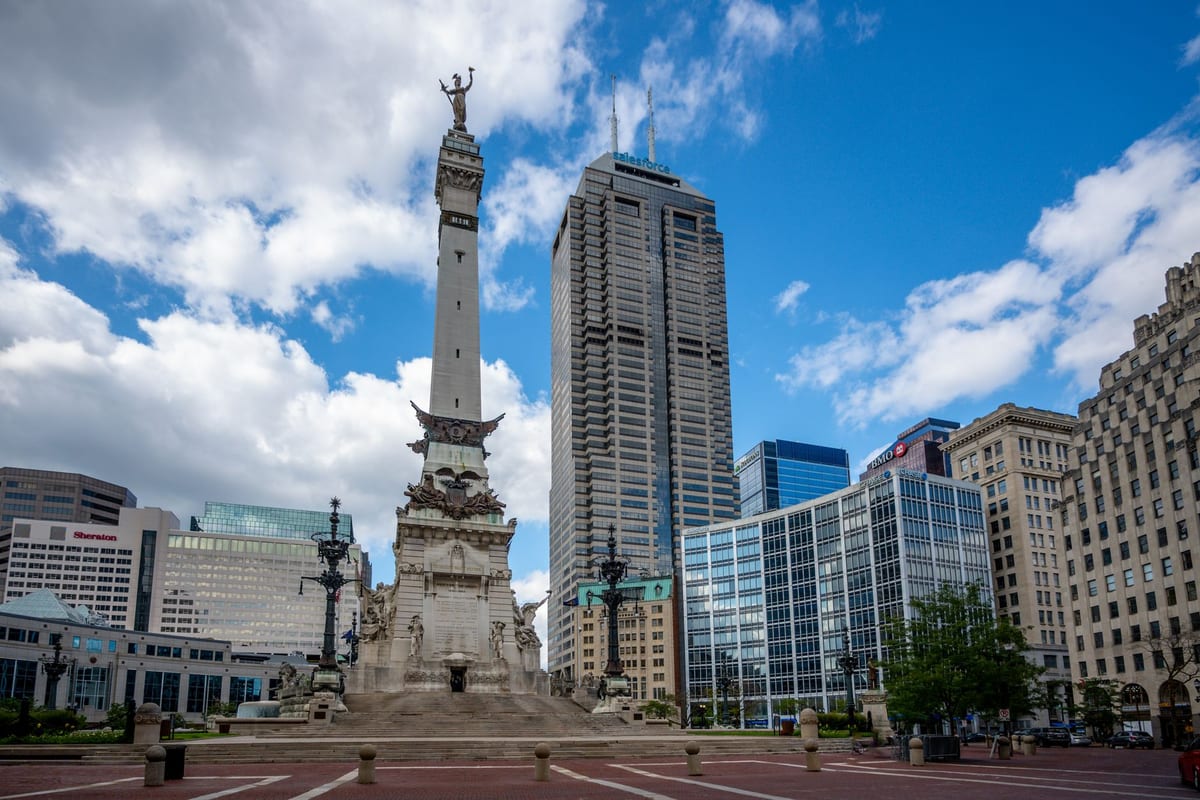
A tall stone monument on a circular plaza with office towers behind it under a blue sky
On this page

Key Takeaways

  1. 1

    Indiana is a small field. Only 9 schools here carry enough published figures to be scored, so a position says how one compares to its in-state neighbors and nothing about how it compares nationally.

  2. 2

    In-state rates vary enormously here. Published annual in-state graduate tuition among the 9 Indiana institutions that report one runs from $8,848 to $46,940, a 5-fold spread inside one state and one reporting year.

  3. 3

    Mostly private institutions. 6 of the 9 institutions with federal figures are private, so most published rates here do not turn on residency, and private sticker prices are discounted more heavily than public ones.

  4. 4

    Some are delivered at a distance. 5 of the 9 carry the federal distance-education flag, which covers coursework and never the supervised practice hours.

How This Ranking Is Scored

Three published figures, weighted. Scores are relative to the 9 institutions on this page and to nothing else.

  1. 50%

    Published in-state graduate tuition

    Institution-level. Published annual graduate tuition, not a DNP per-credit rate and not net of aid.

  2. 35%

    Established program

    Program-level. DNP conferrals in this CIP and award level in the reporting year, saturating at 25. Above that a program scores full marks and gains nothing further for size.

  3. 15%

    Institution-wide undergraduate completion

    Institution-level and undergraduate. The IPEDS 150%-of-normal-time rate for first-time, full-time bachelor's students.

Nothing is imputed. A program that does not publish a figure is scored on the ones it does publish, with the remaining weights renormalized; below 2 published figures it is listed without a position rather than ranked on a single number. Accreditation is a condition of appearing at all, not a factor that earns points. What the rubric cannot see.

Accredited Schools, Ranked

Ordered on published in-state tuition, annual DNP conferrals and institution-wide undergraduate completion, weighted for a state page so cost leads. Scores are relative to the 9 institutions on this page and not to the country, the same program carries a different number on the national list. How this is built.

# Program In-state tuition DNP awards UG completion Score of 100
1 of 9 Purdue University Global West Lafayette, IN · Public · offered online $10,080 42 50% 89.8
2 of 9 Indiana Wesleyan University-National & Global Marion, IN · Private nonprofit · offered online $8,848 20 35% 82.1
3 of 9 Indiana University-Indianapolis Indianapolis, IN · Public $9,518 8 54% 77.8
4 of 9 University of Southern Indiana Evansville, IN · Public · offered online $9,036 2 48% 60.9
5 of 9 University of Indianapolis Indianapolis, IN · Private nonprofit · offered online $35,448 22 56% 57.4
6 of 9 Goshen College Goshen, IN · Private nonprofit · offered online $38,890 4 65% 35.9
7 of 9 Valparaiso University Valparaiso, IN · Private nonprofit $46,940 7 70% 33.9
8 of 9 Marian University Indianapolis, IN · Private nonprofit $40,664 2 67% 27.5
9 of 9 University of Saint Francis-Fort Wayne Fort Wayne, IN · Private nonprofit $35,210 1 55% 24

The Best 9 DNP Programs In Indiana, Ranked

Every ranked institution in Indiana, with what the federal record publishes for it and how its score was composed.

Ranked 1 of 9

Purdue University Global

West Lafayette, IN

89.8 of 100
  • CCNE-accredited
  • Public
  • Doctorate (professional)
  • Offered online

Purdue Global publishes the number most schools keep to themselves: it expects 15 to 18 hours of course work a week. That is the figure to hold up against your roster, and it is more useful than any completion estimate, because an estimate assumes you can find those hours in the first place. The doctorate runs nine courses and averages about a year and a half, taught entirely online. Nine courses is a short structure, which is what a post-master’s route looks like once the clinical core is behind you. This is a public online university of about 45,000 students conferring roughly forty nursing doctorates a year, so the program is real but small against the institution, and your cohort is scattered across the country rather than gathered anywhere.

In-State Tuition
$10,080
Out-Of-State
$13,356
DNP Awards
42
UG Completion
50%

Scored on

  • Published in-state graduate tuition 96.8
  • Established program 100
  • Institution-wide undergraduate completion 42.9
82.1 of 100
  • CCNE-accredited
  • Private nonprofit
  • Doctorate (professional)
  • Offered online

Indiana Wesleyan teaches its doctorate online through the division of nursing inside a school of integrated health, and it is explicit that the environment is Christ-centered, which is information about the cohort rather than a marketing line. The Commission on Collegiate Nursing Education accredits the bachelor’s, the master’s, the doctorate and the post-graduate advanced practice certificate, so the whole ladder is covered. Tuition is charged at one rate regardless of residency, and that rate sits in the lowest quarter on this site, which is unusual for a private university and is the strongest practical argument on this card.

In-State Tuition
$8,848
Out-Of-State
$8,848
DNP Awards
20
UG Completion
35%

Scored on

  • Published in-state graduate tuition 100
  • Established program 91.7
  • Institution-wide undergraduate completion 0

Ranked 3 of 9

Indiana University-Indianapolis

Indianapolis, IN

77.8 of 100
  • CCNE-accredited
  • Public
  • Doctorate (professional)

Indiana publishes both routes with their clinical hours attached, and the difference between them is starker than the credit counts suggest. From a BSN the degree is 66 credit hours and 1,005 clinical hours, and the university puts the fastest completion at three years. From a master’s the post-MSN route is a minimum of 38 credit hours, but it still carries 1,000 total clinical practicum hours. So holding a master’s roughly halves your coursework and barely touches the clinical requirement, because those hours count across your whole post-baccalaureate education rather than starting again. That is the single most useful thing to understand before you compare a post-master’s route anywhere.

In-State Tuition
$9,518
Out-Of-State
$33,647
DNP Awards
8
UG Completion
54%

Scored on

  • Published in-state graduate tuition 98.2
  • Established program 58.6
  • Institution-wide undergraduate completion 54.3

Ranked 4 of 9

University of Southern Indiana

Evansville, IN

60.9 of 100
  • CCNE-accredited
  • Public
  • Doctorate (professional)
  • Offered online

5 DNP tracks at this institution, Clinical Nurse Specialist, Family nurse practitioner, Geriatric, Nursing administration, Nursing practice (general). Ranked once, on the largest.

Southern Indiana publishes three separate credit totals and the gap between them is most of the decision. The post-master’s advanced nursing practice route is 35 credits in the specialty. The BSN-to-DNP family nurse practitioner route is 72. Organizational and systems leadership, also from a BSN, is 70 with 1,000 practice hours attached. What makes the post-master’s route worth a close look is the transfer policy: the college accepts up to 42 credit hours from your MSN, which is more generous than most and is why that first number is as low as it is. Coursework is online with synchronous intensives twice a year, so there are fixed dates in the diary rather than an open-ended commitment.

In-State Tuition
$9,036
Out-Of-State
$21,877
DNP Awards
2
UG Completion
48%

Scored on

  • Published in-state graduate tuition 99.5
  • Established program 15.8
  • Institution-wide undergraduate completion 37.1

Ranked 5 of 9

University of Indianapolis

Indianapolis, IN

57.4 of 100
  • CCNE-accredited
  • Private nonprofit
  • Doctorate (professional)
  • Offered online

Indianapolis publishes a credit total and an hour total for every track, which makes comparing them unusually easy. The two bachelor’s-entry practitioner tracks, family and adult-gerontology primary care, are each 62 credit hours with 1,050 to 1,250 clinical and practicum hours. The executive track is 31 to 36 credit hours against 1,000 practicum hours, and the post-master’s track uses the same credit range against 500 to 1,000 hours. Pace is where they part company. Family and post-master’s take you full-time or part-time, while adult-gerontology primary care and the executive track are part-time only, so if your plan was to push through quickly, those two will not let you. Admission wants a 3.0 cumulative grade point average and two years of full-time work before practicum hours start.

In-State Tuition
$35,448
Out-Of-State
$35,448
DNP Awards
22
UG Completion
56%

Scored on

  • Published in-state graduate tuition 30.2
  • Established program 95.2
  • Institution-wide undergraduate completion 60

Ranked 6 of 9

Goshen College

Goshen, IN

35.9 of 100
  • CCNE-accredited
  • Private nonprofit
  • Doctorate (other)
  • Offered online

Goshen runs its doctorate jointly with Eastern Mennonite University, and the arrangement is unusual: you take courses from faculty at both institutions but enroll at one, and the diploma and the billing follow whichever you pick. One program, two possible names on the certificate. The shape is 33 credit hours across 10 courses, either nine semesters or an accelerated six-semester route finishing in 22 months. Coursework is asynchronous with one required in-person residency. The clinical requirement is 1,000 post-baccalaureate supervised hours, and hours you logged during your master’s count toward it, which is what makes the accelerated option realistic rather than punishing. The doctoral work is an evidence-based practice project rather than a research dissertation.

In-State Tuition
$38,890
Out-Of-State
$38,890
DNP Awards
4
UG Completion
65%

Scored on

  • Published in-state graduate tuition 21.1
  • Established program 35.7
  • Institution-wide undergraduate completion 85.7

Ranked 7 of 9

Valparaiso University

Valparaiso, IN

33.9 of 100
  • CCNE-accredited
  • Private nonprofit
  • Doctorate (professional)

Valparaiso teaches the coursework asynchronously online and keeps the clinical training in person, which is the standard honest arrangement rather than a claim of a fully remote doctorate. Two paths run, one from a bachelor’s and one from a master’s. The university files its doctorate under a family nurse practitioner specialty, so the clinical destination is primary care across the lifespan rather than a systems or leadership role. This is a small private university and the doctoral output reflects it, so expect a cohort measured in single figures and faculty with room to accommodate individual pacing.

In-State Tuition
$46,940
Out-Of-State
$46,940
DNP Awards
7
UG Completion
70%

Scored on

  • Published in-state graduate tuition 0
  • Established program 54
  • Institution-wide undergraduate completion 100

Ranked 8 of 9

Marian University

Indianapolis, IN

27.5 of 100
  • CCNE-accredited
  • Private nonprofit
  • Doctorate (research)

Marian sizes its two main tracks very differently, and that gap is most of the decision. The family nurse practitioner program is 71 credit hours across eight semesters full time. Nurse anesthesia is 87 credit hours and about 36 months. Sixteen credits and a different calendar separate them, so choosing a specialty here changes the length of your commitment as much as its content. Both are full-time shapes rather than something to run alongside a roster. It is a private university in Indianapolis, so it publishes one rate whatever state you live in, and it confers a small number of doctorates a year, which points to small cohorts in both tracks.

In-State Tuition
$40,664
Out-Of-State
$40,664
DNP Awards
2
UG Completion
67%

Scored on

  • Published in-state graduate tuition 16.5
  • Established program 15.8
  • Institution-wide undergraduate completion 91.4

Ranked 9 of 9

University of Saint Francis-Fort Wayne

Fort Wayne, IN

24 of 100
  • CCNE-accredited
  • Private nonprofit
  • Doctorate (professional)

Saint Francis says on its own program page that the doctorate is not currently accepting new students, and points prospective applicants at its master’s practitioner program instead. That is the first thing to confirm with the school before spending time on an application here. When it runs, the program is hybrid, takes full-time or part-time students, and its length varies rather than being fixed. The accreditation history is worth knowing as well: the Commission on Collegiate Nursing Education granted the doctorate a five-year term in 2019 while giving the bachelor’s the full ten, so the two sit on different cycles.

In-State Tuition
$35,210
Out-Of-State
$35,210
DNP Awards
1
UG Completion
55%

Scored on

  • Published in-state graduate tuition 30.8
  • Established program 0
  • Institution-wide undergraduate completion 57.1

Also Accredited In Indiana

These programs hold current CCNE accreditation. They file their DNP conferrals under a specialty classification rather than under Nursing Practice, so the federal tuition and conferral figures used above are not available for them and they are not scored.

  • Eastern Mennonite University CCNE-accredited DNP

    Eastern Mennonite teaches its doctorate with Goshen College as a consortium rather than alone, so what you are choosing between is not two programs but which name goes on your diploma. The degree is 33 credit hours across 10 courses, primarily asynchronous and online, in a nine-semester plan or an accelerated 22-month one, finishing with an evidence-based practice project. You reach 1,000 hours of post-baccalaureate supervised practice, and supervised hours from your master's count toward that total. Entry wants a nursing master's at a 3.3 GPA or a business or health master's alongside a BSN, plus current healthcare work and an unencumbered RN license in the state where your project will happen.

  • Goshen College-Eastern Mennonite University DNP Consortium CCNE-accredited DNP

    This doctorate is run jointly by two colleges, and the arrangement has a practical consequence: you enroll at either Goshen or Eastern Mennonite, and your diploma names the one you chose. The program is 33 credit hours across 10 courses, primarily asynchronous online, taken over nine semesters or in an accelerated 22-month, six-semester option, and it ends in an evidence-based practice project rather than a dissertation. Tuition is $889 a credit hour for 2026-27. A required residency falls within a few weeks of the start rather than at the end. One admission condition is unusually specific: your RN license must be in the state where you will do your project, and that state has to participate in SARA.

  • Purdue University CCNE-accredited DNP

    Purdue takes students from a bachelor's and from a master's, and the two routes are sized very differently: the master's route totals 55 credits and lets you transfer up to 40 from an accredited master's, while the psychiatric mental health track from a bachelor's runs 80. Residency hours arrive in blocks of 192 attached to named practice courses, and several courses are hybrid rather than online, so campus time is built in. Two admission conditions are easy to miss. You need an RN license in the state where your practice will happen, not merely where you live, and an offer of admission has to be accepted within 14 days of the letter.

  • Saint Mary's College-Indiana CCNE-accredited DNP

    Saint Mary's publishes two things almost nobody else does. Its rate is locked: $995 a credit, including the program fee, and it does not rise year to year while you stay enrolled, so the price you accept is the price you finish at. And it pays a preceptor stipend to every admitted student, which matters because finding and keeping a preceptor is the cost most programs leave to you. The plan runs nine semesters over three years, with two immersion weekends a year in fall and spring. Applications for fall open September 1 with an April 15 priority deadline, then stay open on a rolling basis while seats last. Your RN license must be in the state where your clinical hours happen.

Choosing A DNP Program In Indiana

What studying in Indiana changes. The questions that apply wherever you study are on the national ranking page.

Settle your residency before you compare anything else

Across the 3 public institutions in Indiana publishing both rates, the out-of-state rate runs a median of 2.4 times the in-state one. At Indiana University-Indianapolis the gap is $24,129 a year on its own. Residency is decided by the state under its own rules and a distance program does not confer it, so for an out-of-state applicant this one question is worth more than the difference between most of the programs on this page.

With 13 to read, cut on the track before you cut on the school

That is more institutions than anyone reads properly, and the cut that removes most of them is the population focus rather than the ranking. A university with a strong doctorate may not run the specialty you want, and a track can be closed to new applicants while the rest of the program keeps recruiting. Decide the specialty first, then read what is left. The table above orders what remains on published tuition, conferrals and completion.

The Indiana board of nursing decides the license, not the diploma

No doctorate confers authority to practice or prescribe. That authority comes from an advanced practice license the state issues and the national certification behind it, which is why a DNP-prepared and a master's-prepared nurse practitioner on the same license prescribe the same things. What varies between states is the licensure requirement itself, so take it from the board rather than from a program page, and take it early: several programs want an active license in the state where your practicum will happen rather than wherever you hold one now, and licensure by endorsement runs to months. What the degree does and does not grant sets out the distinction.

The distance flag here records delivery, not your week

5 of the 9 measured institutions in Indiana carry it. That flag records only that taught content can be delivered at a distance. It says nothing about campus days, and nothing about the supervised practice hours, which happen in a building with a preceptor present wherever you enroll. Ask for the number of on-campus days and the months they fall in, because that is what you hold against a roster. Online DNP programs ranks the distance-flagged field nationally.

The schools without figures are not the weaker ones

4 accredited institutions in Indiana file conferrals under a specialty classification rather than under Nursing Practice, so the federal columns this page ranks on do not exist for them. They carry the same CCNE accreditation as everything in the table above. A missing figure here is a filing convention rather than a verdict, and reading it as one would put a real option out of your reach for no reason. The notes beside those names come from the schools' own pages.

Who Licenses You In Indiana

Practice environment, as AANP classifies it
Reduced Practice
Licensing body
Indiana State Board of Nursing
Verify a license
Nursys, the national license verification system operated by the boards themselves

AANP places Indiana in its reduced practice category, which it defines this way: state law reduces the ability to engage in at least one element of practice, typically by requiring a career-long collaborative agreement with another health provider, or by limiting the setting in which an element of practice may happen.

A degree confers no prescriptive authority. It comes from a state advanced practice license and the national certification behind it, so a DNP-prepared and a master’s-prepared nurse practitioner holding the same license prescribe the same things.

So the thing to settle here is not the degree, it is the collaborative agreement. Ask the board what the agreement has to contain and who may sign it, then ask a prospective employer whether they already have one in place, because a license you cannot use until a physician signs is a different proposition from one you can.

Practice environment from AANP's Indiana fact sheet, read 2026-09-08; AANP last revised the classification 05/2026. It is AANP's reading of state statute rather than a federal designation, and statutes move each legislative session, so confirm it with the board before you rely on it. Board details read from the NCSBN member directory on 2026-09-08. Licensure requirements change by legislative session, so treat anything you read here as a pointer to the board rather than a substitute for it.

What The Work Pays In Indiana

BLS OEWS, May 2025. BLS classifies by occupation, not by credential: there is no DNP wage series, and every figure here covers everyone in the occupation regardless of which degree they hold.

OccupationMedian, IndianaEmployedRankNational median
Nurse practitioners29-1171$128,8307,45040 of 51$132,300
Registered nurses29-1141$83,50068,98036 of 51$97,550
Nursing Instructors and Teachers, Postsecondary25-1072$76,0801,52042 of 51$80,250

One occupation is missing from the table above: nurse anesthetists. BLS suppresses state estimates independently per occupation, so a blank here means the survey published no figure for Indiana rather than that nobody does the work. Nationally the median is $236,590.

Nurse practitioners in Indiana have a median of $128,830, which ranks 40 of the 51 jurisdictions the survey publishes a median for, across about 7,450 people in the state. That sits in the lower third of the jurisdictions the survey publishes, which is worth setting against local costs before reading it as a verdict.

A median is the midpoint of what people in the occupation are paid, so half earn less and half earn more; it is not a starting salary and not an offer. Every row is one federal series, ranked against every jurisdiction that series covers. Nothing here is a job-board average. DNP salary sets out the national picture.

Shortage Areas, And The Debt Relief Attached To Them

HRSA designated primary-care Health Professional Shortage Areas, read 2026-09-08.

Designated areas
143
Of those, rural
78
Median score
15
Highest score
23

Most designated shortage in Indiana is rural, 78 of 143 designations, but the remaining 65 sit in urban and suburban areas, so eligibility is not only a country question here. A designation is a statement about how many primary-care providers serve a defined area relative to its population. It describes supply, not hiring.

The designations here differ widely in priority. The median scores 15 against a highest of 23, so which approved site you join moves your funding position further than anything about the state as a whole does.

Both federal loan repayment routes open to advanced practice nurses require working at an approved site inside a designated area, and the area’s score sets funding priority when applications outrun the money: Nurse Corps Loan Repayment Program and NHSC Loan Repayment Program. HPSA primary-care scores run 0-25; funding priority for loan repayment follows the score.

Whether a particular employer counts as an approved site is settled by the program, not by the designation, so check the site before you take the job rather than after. HRSA's shortage-area data portal maps the designations. Paying for a DNP covers the routes that do not depend on where you practice.

Studying From Outside Indiana

5 of the 13 accredited doctorates in Indiana carry the federal distance-education flag, which leaves most of the local field expecting you in the room and makes an out-of-state program a real comparison rather than a fallback. Either way it turns on one thing this site cannot answer for you.

Authority to enroll a distance student is set per institution and per state, and the federal flag this page counts records delivery rather than permission, so only the school can answer it. Ask two things before tuition enters the conversation: whether the program can enroll a resident of Indiana this cycle, and whether it will place you for supervised clinical hours near where you live.

What The Figures On This Page Are

Tuition is the institution's published annual graduate rate. It is not a DNP per-credit price, it is not a total program cost, and it is not what anyone pays after aid. A DNP taken part-time over four years does not cost four times the annual figure, because most programs bill by the credit.

DNP awards are conferrals in the reporting year at that institution. The figure says a program is running and how much of it is running; it does not say the program is better than a smaller one, and the rubric stops rewarding volume above 25 conferrals for that reason.

Undergraduate completion is exactly that, the federal 150%-of-normal-time rate for first-time, full-time bachelor's students at the institution. It is the weakest input in the model and carries the smallest weight. No federal series reports DNP completion, so nothing on this site claims one.

Of the 9 institutions with federal figures here, 3 are at public institutions. In-state tuition at a public school is available only to residents; the out-of-state rate is frequently two to four times higher and is the figure an out-of-state applicant should be reading.

5 institutions here are flagged by the federal survey as offered at a distance. That flag records how the coursework is delivered. It does not mean the clinical hours are remote, and it does not mean a student never travels to campus.

Frequently Asked Questions

Answers specific to Indiana. The degree-wide questions are answered on the guides.

How many DNP programs are there in Indiana?

13, and the cheapest published rate belongs to a private institution: Indiana Wesleyan University-National & Global at $8,848 against Valparaiso University at $46,940. That inverts the assumption most applicants arrive with, because a private school charges one rate wherever you live while a public one prices residency.

How much does a DNP cost in Indiana?

Published in-state rates run $8,848 to $46,940, a spread of about 5.3 times inside one state. At that width the ranking matters less than knowing which end you are looking at, and the cheap end is usually public and usually conditional on residency.

Is a DNP cheaper in Indiana if you live there?

Sharply. Indiana University-Indianapolis publishes $9,518 in state against $33,647 out of it, 3.5 times the rate, so residency is worth more here than the difference between most of the schools on this page. Ask the registrar what establishing it takes before you assume you can.

Can a nurse practitioner practice independently in Indiana?

Not fully. Indiana is reduced practice in AANP's classification, meaning statute limits at least one element of practice and requires a career-long collaborative agreement with another provider. What that agreement must contain is set by the board, and it is worth reading before you plan a career here rather than after.

What do nurse practitioners earn in Indiana?

A median of $128,830, $3,470 below the national $132,300. Worth setting against what the degree costs here before treating the gap as a verdict on the state.

Does federal loan repayment apply in Indiana?

It can. 143 designated primary-care shortage areas, 78 of them rural, so both kinds of site exist. Eligibility attaches to an approved site rather than to the jurisdiction, which makes it an employer question.

Can you study for a DNP online in Indiana?

5 of the 9 measured institutions carry the flag. It covers taught content and nothing else, so the number to ask each school for is on-campus days and the months they fall in.

Sources

Two datasets produce every figure on this page, and the institutions those figures describe are listed under them. Nothing here is compiled from a school's own marketing material.

  1. 1 CCNE Accredited Program Directory It decides which institutions appear on this page at all: the 13 in Indiana below are the ones it lists as holding current accreditation for the Doctor of Nursing Practice.
  2. 2 IPEDS Published tuition, annual conferrals, institutional completion and the distance-education flag.

Every federal figure on this site is read from the administering agency’s own page, never from a secondary aggregator, and the reading date is recorded beside it.

The Institutions Behind These Figures

Every institution the two datasets name in Indiana, alphabetically. A link is the web address that institution reports to the federal directory, the school’s own site, not a page about the doctorate.

  1. 1

    Eastern Mennonite University

    On the CCNE roster; no federal record under a nursing doctoral classification, so no directory address and no figures

  2. 2

    Goshen College

    Goshen, IN · Private nonprofit · carries federal figures

  3. 3

    Goshen College-Eastern Mennonite University DNP Consortium

    On the CCNE roster; no federal record under a nursing doctoral classification, so no directory address and no figures

  4. 4

    Indiana University

    Indianapolis, IN · Public · carries federal figures · filed federally as Indiana University-Indianapolis

  5. 5

    Indiana Wesleyan University

    Marion, IN · Private nonprofit · carries federal figures · filed federally as Indiana Wesleyan University-National & Global

  6. 6

    Marian University

    Indianapolis, IN · Private nonprofit · carries federal figures

  7. 7

    Purdue University

    On the CCNE roster; no federal record under a nursing doctoral classification, so no directory address and no figures

  8. 8

    Purdue University Global

    West Lafayette, IN · Public · carries federal figures

  9. 9

    Saint Mary's College-Indiana

    On the CCNE roster; no federal record under a nursing doctoral classification, so no directory address and no figures

  10. 10

    University of Indianapolis

    Indianapolis, IN · Private nonprofit · carries federal figures

  11. 11

    University of Saint Francis

    Fort Wayne, IN · Private nonprofit · carries federal figures · filed federally as University of Saint Francis-Fort Wayne

  12. 12

    University of Southern Indiana

    Evansville, IN · Public · carries federal figures

  13. 13

    Valparaiso University

    Valparaiso, IN · Private nonprofit · carries federal figures

Compare accredited DNP programs

Browse all programs